ServicesWhole-Home Filtration
Whole-Home Water Filtration in El Mirage
A whole-home filter treats water right where the supply enters the house, so the kitchen, showers and laundry all draw from the same cleaner source. Before choosing equipment, we pin down what causes the taste, odor or grit you notice, then size the media and flow rate to it.
Where the filter goes and what it removes
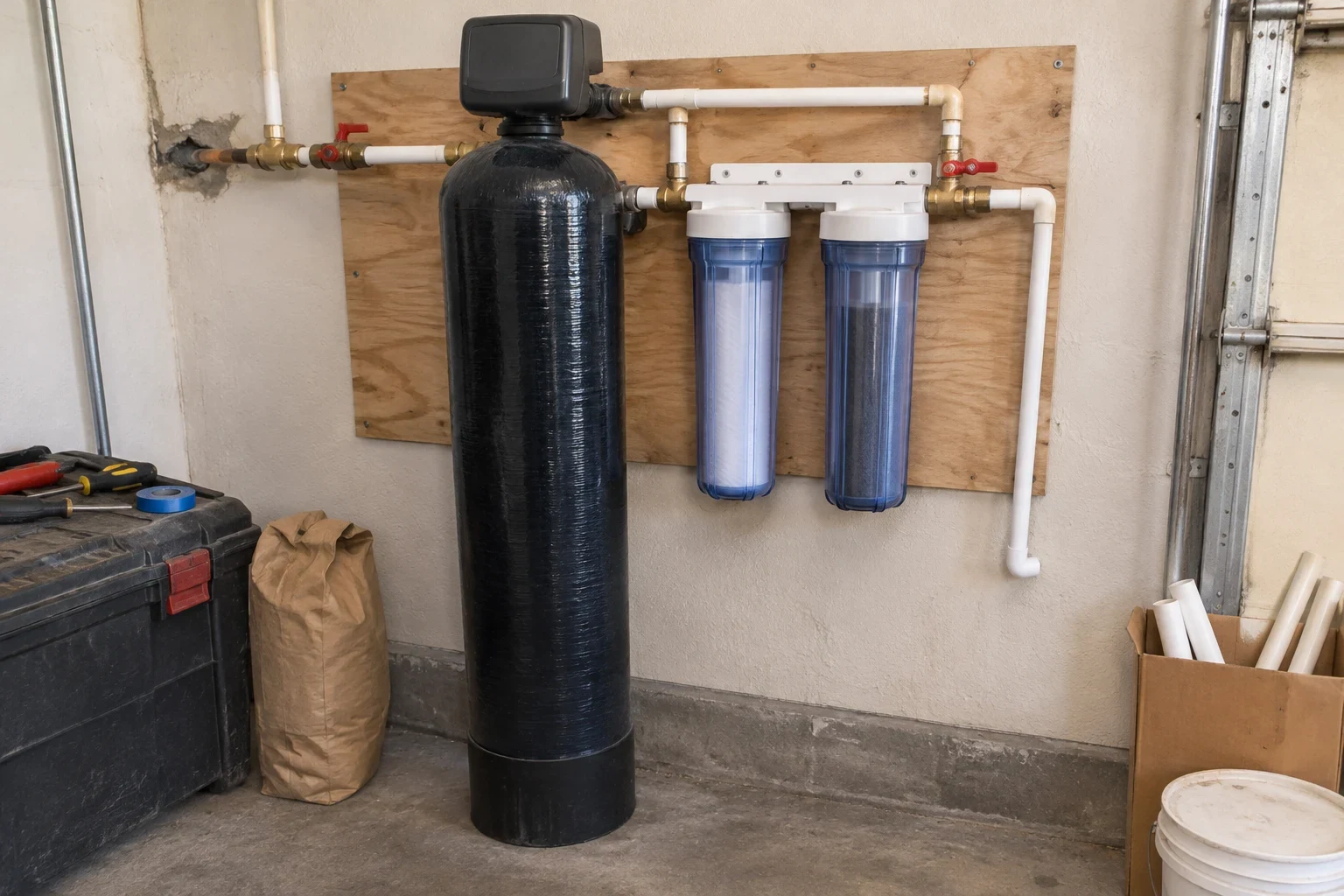
The system is installed on the main line just after it enters your home, upstream of the water heater and every fixture. In most setups a sediment stage comes first to catch sand, grit and scale flakes, followed by a carbon tank that strips chlorine along with the taste and smell it brings. If the supply is treated with chloramine rather than chlorine, we specify catalytic carbon, since ordinary carbon breaks chloramine down only slowly.
Carbon does nothing for hardness. Calcium and magnesium, the minerals behind white buildup on faucets and glass shower doors, flow right through it, and removing them is a softener's job. Plenty of homes around El Mirage run both, with the filter placed first so chlorine does not degrade the softener resin. If scale turns out to be your real problem, you will hear that from us before any filter is quoted.
Parts and work in every install
Sediment prefilter
A spin-down screen or cartridge stops sand and flakes before they reach the carbon. That keeps the carbon bed from fouling early and spares valve seats and faucet aerators downstream.
Carbon tank
Standard or catalytic carbon in a tank matched to the peak flow your home draws. Too small a tank pushes water through faster than the carbon can treat it.
Bypass and isolation valves
A bypass loop lets you keep water on while media is changed. Shutoffs on the inlet and outlet sides make later service quick and dry.
Inlet and outlet gauges
Reading the pressure on each side tells you how much the system is restricting flow. A widening gap means the prefilter is filling, so you change it when it needs it rather than by the calendar.
Flushing, leak checks and cleanup
New carbon releases fine black powder on its first use, so the tank is flushed to drain until nothing dark is left in the water. With the line back at full pressure, we inspect every joint for leaks, then clear away packaging and pipe scraps before we go.
Signs a whole-home filter is the right fix
Chlorine smell in the shower
Hot water releases chlorine into steam, so the smell is often strongest in a closed bathroom. A kitchen faucet filter cannot help there, but a whole-home carbon tank can.
Grit in aerators and showerheads
Sand or small particles collecting in faucet screens point to sediment in the supply. A prefilter catches it before it scratches valve cartridges or clogs appliance inlet screens.
Every tap tastes the same, and you don't like it
If the bathroom sink and the fridge dispenser share the same chemical taste, the cause is upstream of all of them. Treating the main line fixes it once.
Odor only from the hot side
This one is often not a filtration problem. A rotten-egg smell from hot water alone usually points to a reaction at the water heater anode rod, and we will say so rather than install a filter that won't change it.
You are adding a softener
Chlorine slowly breaks down softener resin. Putting carbon ahead of a new softener helps the resin last, which is why we often plan the two together.
From your first call to treated water
- 1
We ask about symptoms
By phone we find out what you notice, which rooms it shows up in, and whether it comes from the hot side, the cold side or both. Those details usually narrow the cause before any tools come out.
- 2
We look at the plumbing
We locate the main, usually in the garage or on an exterior wall, and note the pipe material, the space available and any filter or softener already in place. We also read the utility's published water quality report so the media fits what the supply actually carries.
- 3
You get a straight recommendation
We explain what we believe is behind the problem, which system addresses it and what upkeep it needs. When a softener or a reverse osmosis system is the better answer, that is what we recommend.
- 4
Installation
With the main closed, we cut the filter into the line along with its bypass and shutoff valves, and your water comes back on before we leave. Once the media is flushed and the joints are leak-checked, we walk you through the bypass, the gauges and a prefilter change.
What sets the cost of your system
Two homes with the same chlorine taste can need very different installs, so we price the job only after seeing your plumbing. The quote you get by phone separates equipment from labor, line by line, so nothing is buried in a single total.
- Peak flow and number of baths
- A house with three bathrooms running at once pulls more gallons per minute than a two-bath home, and the carbon tank has to keep up without starving the showers. We size by gallons per minute rather than by square footage alone.
- Carbon grade and tank style
- Catalytic carbon, needed where the supply carries chloramine, is priced higher than ordinary carbon. A self-backwashing tank costs more at the start than a cartridge housing, but you replace media far less often.
- Where the line runs
- Copper or PEX on an open garage wall is a quick cut-in. A cramped utility space, a main that must be rerouted or an outdoor spot that needs a sun cover adds labor and fittings.
- Other equipment on the line
- Setting the filter in front of a new softener, or feeding an existing one, changes the pipe layout and adds valves and connectors to the parts list.
Common questions about whole-home filters
Something not covered here? (623) 288-0758
Will a whole-home filter stop the white spots on my fixtures?
No. That crust is calcium and magnesium, and carbon lets both pass. Hardness is the job of a water softener, while the filter in front of it takes out chlorine and sediment. If you need both, we plan them as one install.
Does a whole-home filter cost me water pressure?
A tank sized to your home's peak demand takes very little, and most people never notice a difference at the showerhead. Pressure loss you can actually feel nearly always comes from an undersized tank or a prefilter clogged with sediment. The gauges on the inlet and outlet sides make a clogged prefilter obvious at a glance.
How often does the media need changing?
Prefilter cartridges typically need swapping every few months, depending on how much grit your supply carries. The carbon bed lasts much longer, and its life depends on tank size and how much water your household uses. We give you a schedule for your specific setup on install day.
Can the filter go outside?
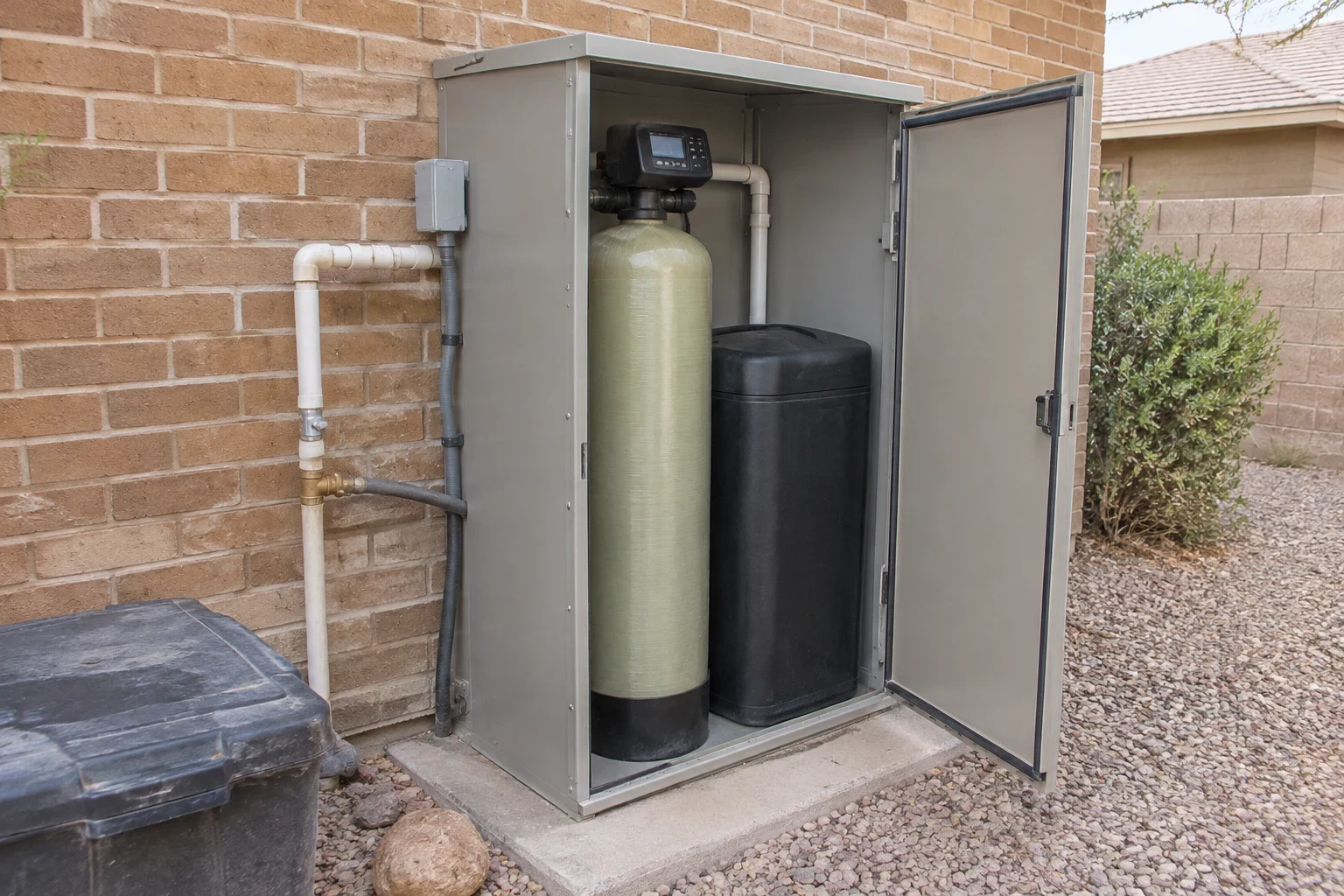
It can, with protection. Arizona sun breaks down plastic housings and heats the media, so an outdoor system needs a cover or a shaded wall. When there is room, the garage is usually the easier spot.
Do I still need a reverse osmosis system for drinking water?
Not necessarily. Whole-home carbon handles chlorine taste at every tap, while a reverse osmosis system under the kitchen sink strips out dissolved minerals and a much wider range of contaminants for drinking and cooking. If you want that added step for your glass, we can show how the two systems work side by side.
Start with the cause, not the catalog
Describe the taste, smell or grit you notice and which taps it comes from. We will walk you through what is most likely behind it and whether a whole-home filter will actually solve it, for homes in El Mirage and neighboring Surprise and Glendale.