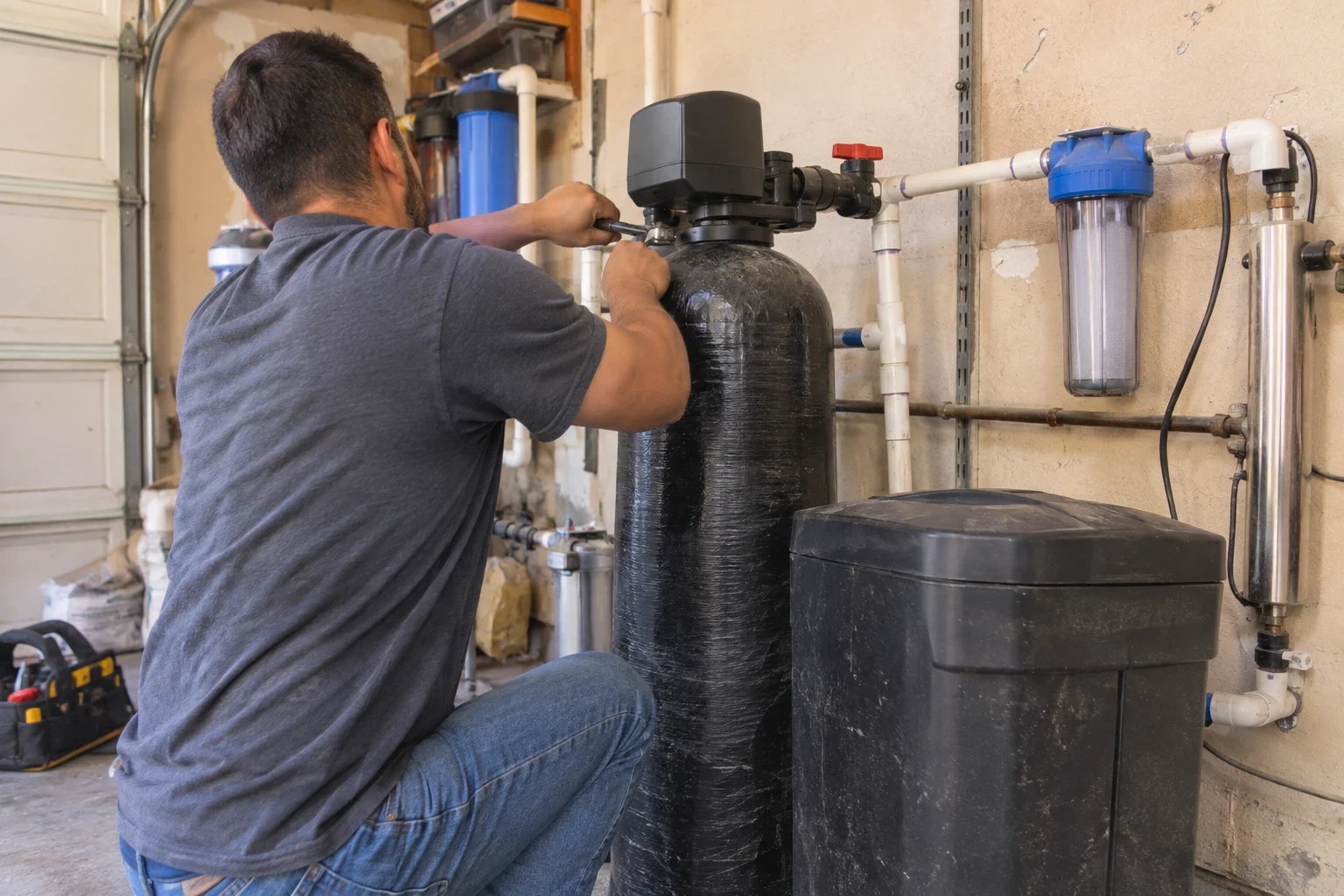
Water Softeners in El Mirage, Sized After We Find the Cause
We install water softeners, whole-home filtration and under-sink reverse osmosis for homes in El Mirage, Surprise and Youngtown. Before we recommend anything, we look at where the scale forms, what the water tastes like and how your plumbing is laid out. Then we size the equipment to that, not to a sales sheet.
- Cause found before quoting
- Line-item written quotes
- Softeners sized by household use
- Floors covered on install day
Softeners, Filters and RO for Your Home
Most calls we get start with a symptom: white crust on a showerhead, spots on glasses, a chlorine smell at the tap, or a softener that stopped keeping up. Each of those points to a different fix. Water softener installation handles the calcium and magnesium behind scale, whole-home filtration uses carbon to take out chlorine taste and odor, and a reverse osmosis system gives you cleaner drinking and cooking water at one faucet. Automated salt delivery keeps a softener's brine tank stocked so the resin never runs out of regenerating capacity.
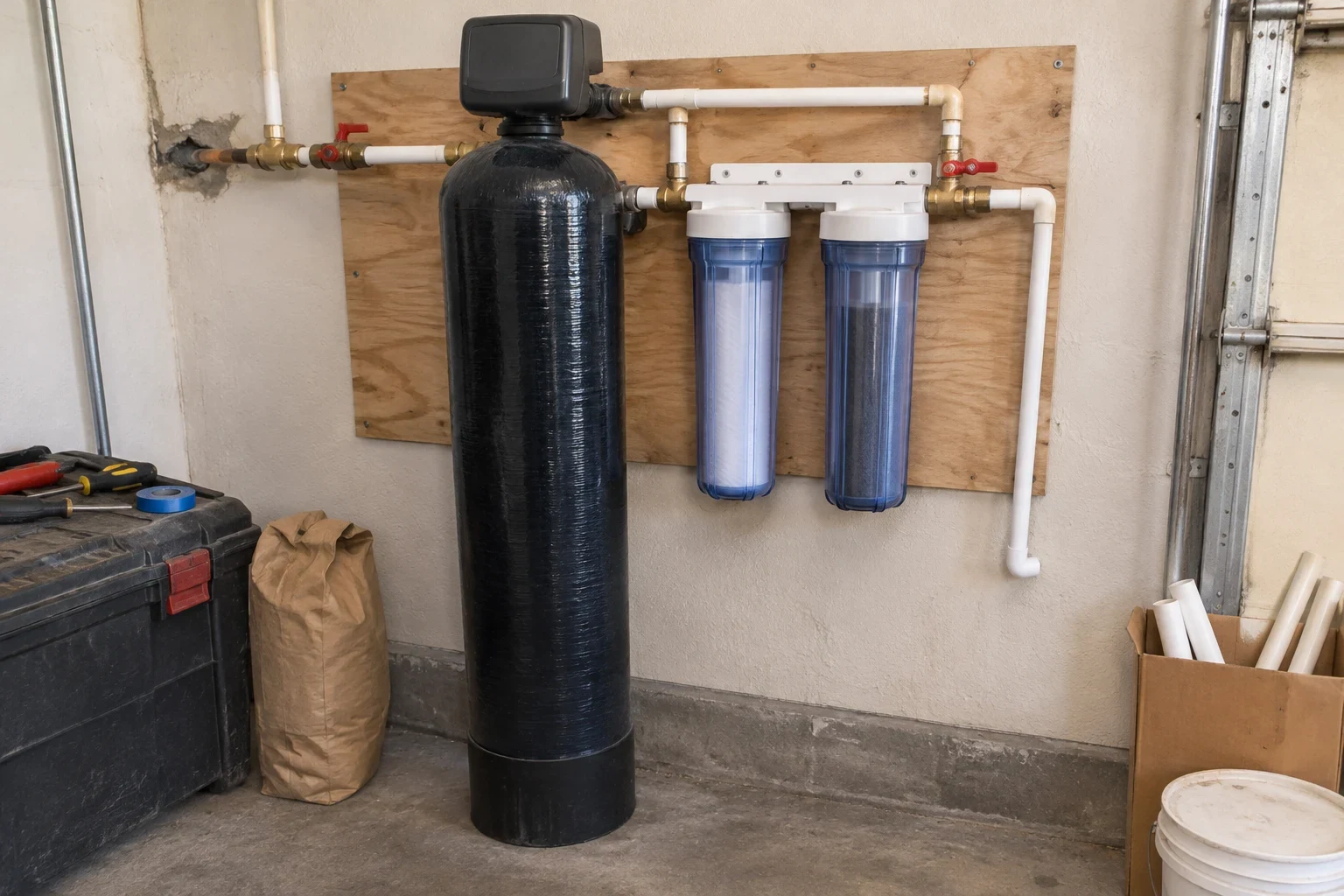
Whole-Home Filtration
Carbon and sediment filtration at the main line, chosen after we pin down what is actually wrong with the water coming into your home.
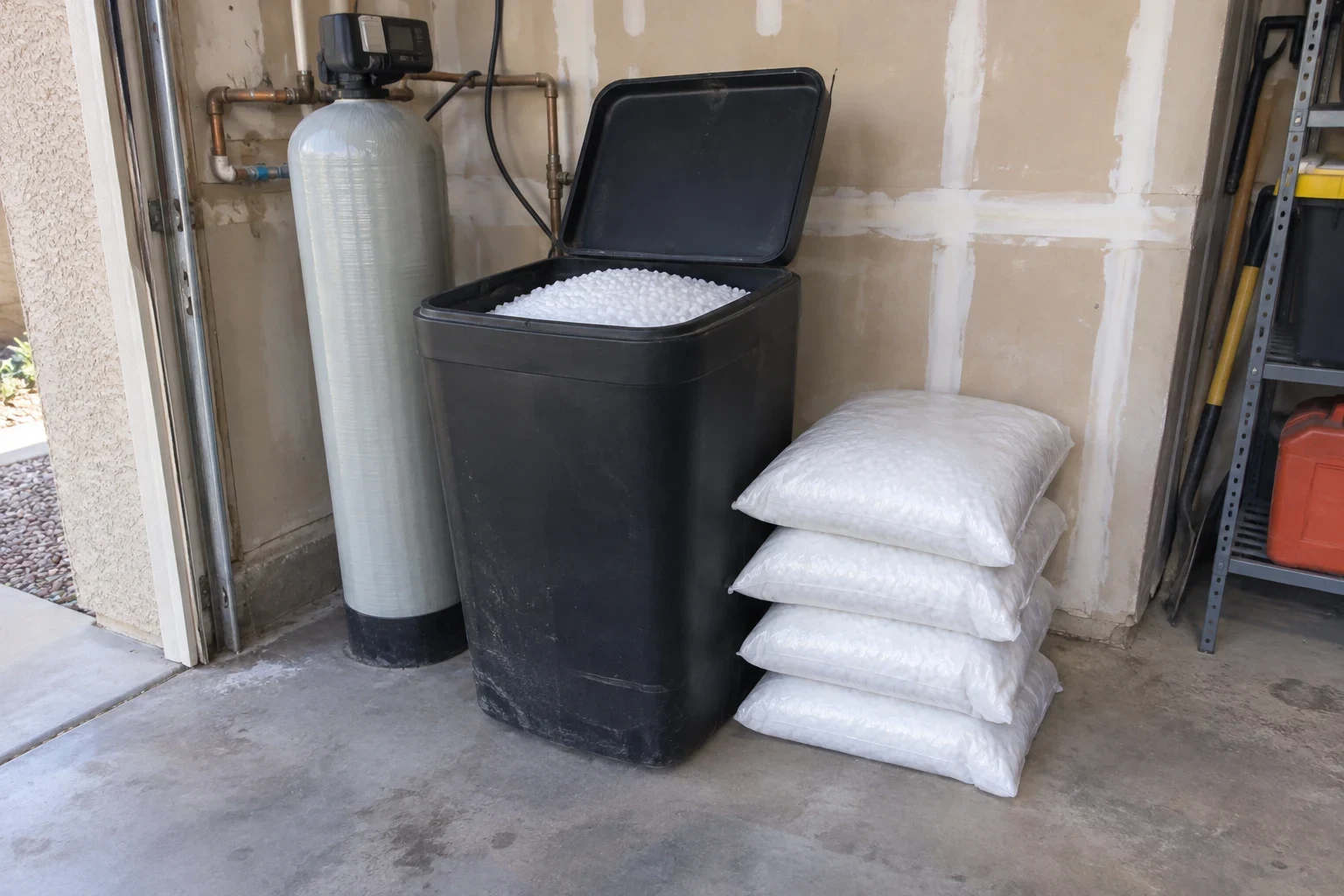
Salt Delivery
Scheduled softener salt delivery where we carry the bags in, fill the brine tank and look for bridging or a misbehaving control valve each visit.
Water Softener Installation
We size the softener from your water's hardness and your daily use, then plumb it in with a bypass, a proper drain and settings matched to your home.
Reverse Osmosis System
An under-sink reverse osmosis system that gives you filtered drinking and cooking water at its own faucet, matched to your water pressure and plumbing.
What Moves the Price of a System
The tank itself is only one piece of the price. How your plumbing is laid out, how far the nearest drain sits and what has to be added to tie everything together all show up on the quote. That is why we look before we price.
After we have seen your home and talked through the problem, you get a written quote with each part and the labor on its own line. If opening a line turns up something new, we explain it and price it before any more work happens.
- System type and capacity
- A softener with a larger grain capacity costs more than a smaller one, and a metered control valve costs more than a basic timer valve. The metered valve tracks the gallons that actually flow through and starts regeneration only when the resin is nearly spent. Over the years that usually means fewer bags of salt and less water going down the drain.
- Existing softener loop
- Many newer homes have a softener loop already plumbed in the garage, which keeps the install simpler. Without one, we cut into the main line, add inlet and outlet piping and route a drain, and those parts and hours go on the quote.
- Drain and power access
- A softener sends its regeneration water to a drain, and most control valves need an outlet nearby. When either one is a long way from the best spot, we run longer lines or pick a different location.
- Filter media and stages
- Whole-home filtration can be one carbon tank or a sediment prefilter ahead of carbon. Catalytic carbon costs more than standard carbon but does a better job on some disinfectants. Each added stage is more media to replace down the road.
- Under-sink space for RO
- A reverse osmosis system needs room for its filter housings and storage tank, a cold water connection, a drain saddle and a hole for its own faucet. A packed cabinet or a stone countertop takes extra time.
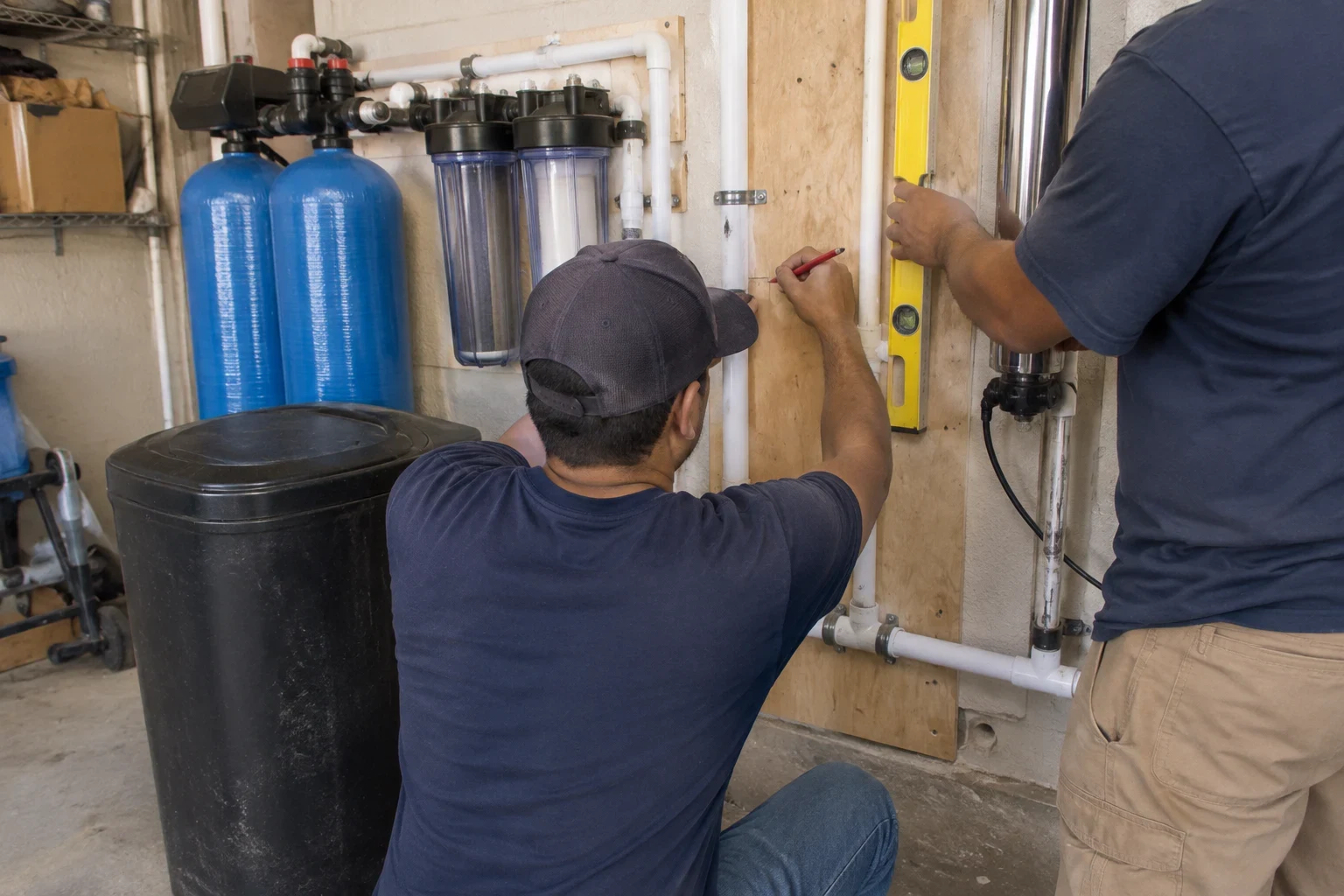
A Small Company That Starts With the Problem
Water Softener El Mirage installs and sets up water treatment equipment in homes across the West Valley. We focus on four things: softeners, whole-home carbon filtration, reverse osmosis drinking water systems and automated salt delivery. Keeping the list short means we know each system well, from how resin beads exchange hardness ions for sodium to why a carbon bed loses effectiveness once its surface area is used up.
Our approach is simple. We would rather spend a few extra minutes figuring out why your faucets are crusting over or your water smells like a pool than sell you a bigger system than you need. When the cause is clear, the equipment choice usually is too, and you are not left paying for something that does not address the actual issue.
- Warranty
- 2-year labor warranty; 2-year installation warranty; 15-year warranty on the resin
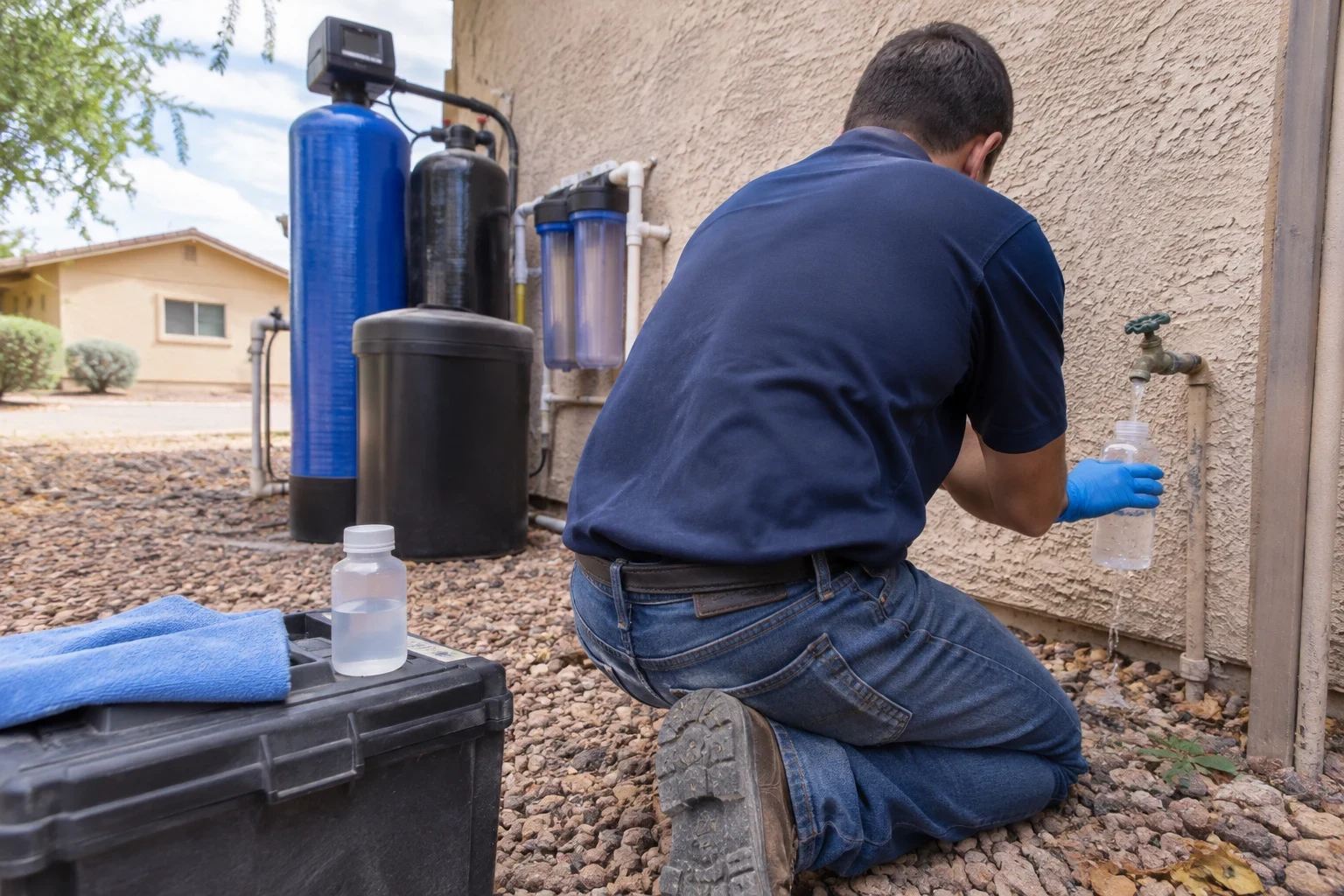
Why We Diagnose Before We Sell
A softener will not fix a chlorine smell, and a carbon filter will not stop scale. Picking the wrong one wastes money and leaves the original problem in place.
- We match the symptom to its source
- Hard, chalky buildup is a mineral problem. A bleach-like smell is a disinfectant problem. A bitter or flat taste at the kitchen sink may call for RO instead of anything whole-house. We sort out which one you have before we name a system.
- Equipment sized to how you use water
- A softener's resin tank and control valve should match your household's daily water use and your water's hardness. We work from your water provider's published water quality report and the number of people in your home, so the unit regenerates when it should instead of wasting salt or running out early.
- Quotes broken out by part
- Your written quote lists the softener or filter, the bypass valve, fittings, drain line work and labor as separate lines. You can see what each piece costs and ask about any of it.
- Installs set up to be serviced
- We plumb a bypass valve on every softener and whole-home filter so you can isolate the system without shutting off water to the house. Drain lines get a proper air gap, and we leave the unit where filters and salt are easy to reach.
- Your home kept clean
- We lay down floor covering from the door to the work area, catch water when we open a line, and haul away old equipment and packaging when we finish.
How a Job Runs From First Call to Startup
Every step is there so the system we put in fixes the problem you called about, not a guess at it.
- 1
A conversation by phone
You describe what you are seeing, smelling or tasting, and tell us the age of any equipment you already have. That usually narrows it to one or two likely causes.
- 2
A look at your home
We check where scale is collecting and look over the existing plumbing, any softener loop, the drain options and the space you have. We also go through the water provider's report so the sizing rests on real numbers.
- 3
Options and a written quote
We explain what we recommend and why, along with anything we would steer you away from for your situation. Every part and the labor appear as separate lines.
- 4
Installation and startup
Floor protection goes down first. With the main valve shut, we tie the system into your line, add a bypass valve and connect the drain. Then we program the control valve for your hardness and household size, run a regeneration or flush cycle and check each fitting for drips before packing up.
- 5
Hand-off and haul-away
Before we leave, we point out where the bypass valve is, how salt goes into the brine tank or how a cartridge comes out, and what the readout on the control valve is telling you. The old equipment, packaging and debris go out with us.
Questions We Hear Most
Something not covered here? (623) 288-0758
Is my problem something a softener fixes, or do I need filtration?
The symptom usually tells us. Chalky white crust on fixtures, spotted glassware and stiff towels come from calcium and magnesium, and that is softener work. A pool-like smell or taste comes from the disinfectant, and carbon filtration is the fix for that. Some homes need both, and we will say so plainly when one system alone covers what you are seeing.
Will softened water taste salty?
Usually not. A softener swaps calcium and magnesium for a small amount of sodium, and at typical hardness levels most people do not notice it. If you want to cut that sodium in your drinking water, or just want cleaner water for cooking and coffee, an under-sink reverse osmosis system at the kitchen faucet removes most of it.
Does a water softener remove chlorine?
No. Softener resin is built to trade out hardness minerals, not chlorine or chloramine. For disinfectant taste and odor, you need a carbon stage, either as whole-home filtration ahead of the softener or inside an RO system for drinking water. Carbon placed before the softener also helps the resin hold up longer.
How often does a softener need salt?
That depends on your hardness, how much water your home uses and how the valve is set. A metered valve programmed correctly goes through less salt than one regenerating on a fixed calendar. If hauling bags is a chore you would rather skip, our automated salt delivery service keeps the brine tank filled for you.
What warranty comes with an installation?
Our installations carry a 2-year labor warranty. We go over what it covers when we walk you through your quote, so you know before install day.
How long does an installation take?
A softener going onto an existing loop is usually a straightforward job. Installs that need new piping off the main line, a longer drain run or a filter and softener together take longer. Once we have seen your plumbing we give you a realistic time frame, and your water stays off only while lines are open.
Can the new unit go where my old softener sits now?
Often, yes. We confirm the existing loop, drain and outlet are in good shape and that the new tanks fit the space. If any connection is corroded or too small, we show you and add it to the quote as its own line.
Where We Install
We set up softeners, filters and RO systems in homes across El Mirage and the West Valley around it, including Youngtown, Sun City, Sun City West, Surprise and Peoria. Our install area also reaches Glendale, Litchfield Park, Citrus Park and Tolleson. Every job follows the same order wherever it is: we pin down the cause, size the equipment to it and put the quote in writing.
- El Mirage
- Youngtown
- Sun City
- Sun City West
- Glendale
- Surprise
- Litchfield Park
- Citrus Park
- Peoria
- Tolleson
Near the edge of that list and unsure if we cover your street? Mention your town on the call and we will give you a straight yes or no.
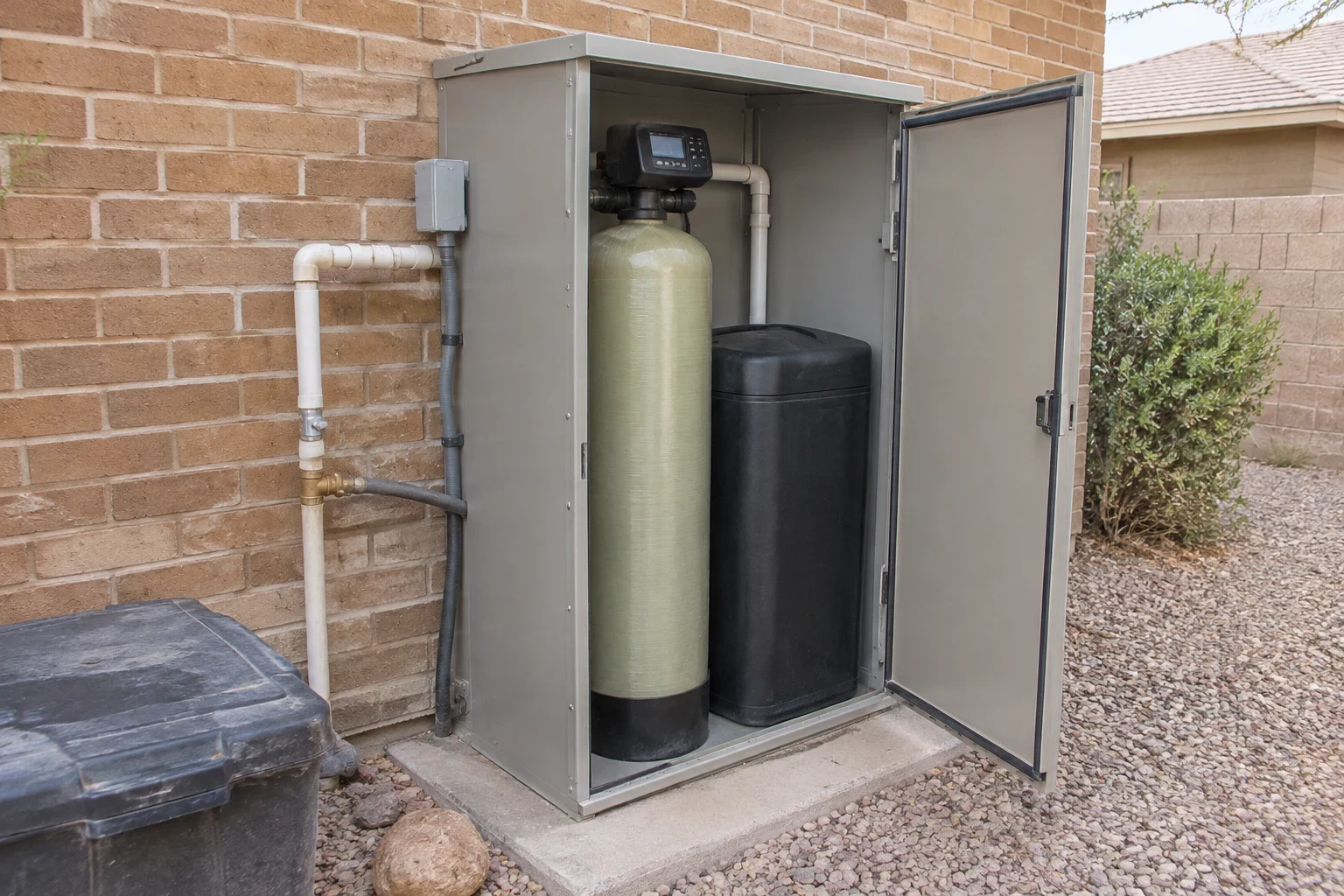
Find Out What Your Water Actually Needs
Tell us what you are seeing at your faucets and fixtures. We will explain the likely cause, what would fix it and what the next step looks like.