ServicesSalt Delivery
Automated Salt Delivery in El Mirage
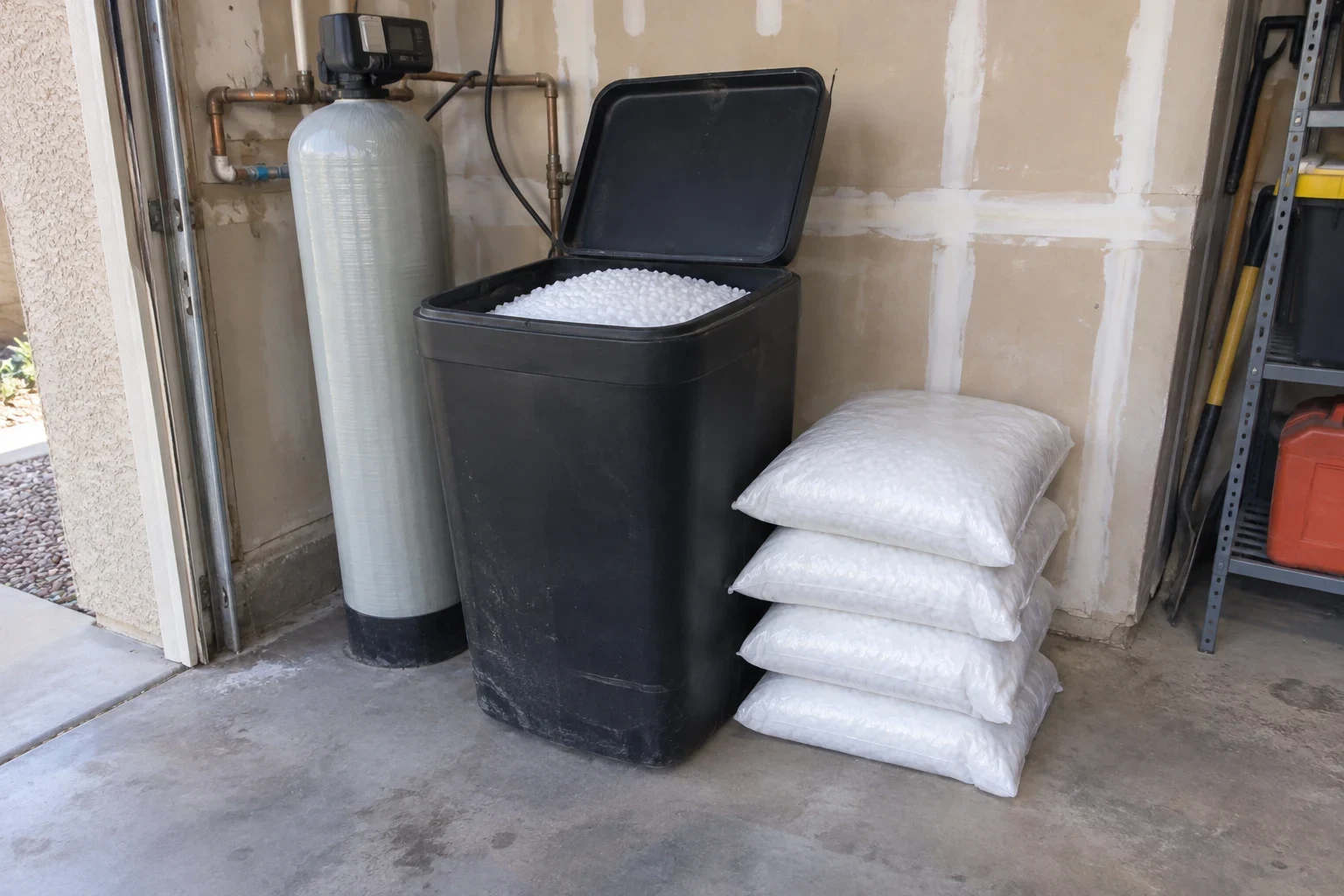
We bring softener salt to your home on a schedule matched to how fast your brine tank actually drops, carry it to the softener and pour it in. Each visit we also check for salt bridges and odd usage, so problems get caught early.
Salt on a schedule, plus a look inside the tank
A water softener strips hardness by trading calcium and magnesium for sodium or potassium on its resin beads. Every regeneration cycle pulls brine from the salt tank to recharge that resin. When the salt runs out, the softener keeps cycling but recharges nothing, and hard water goes straight through to your fixtures and water heater.
Our salt delivery service takes the 40-pound bags off your list. We set a delivery interval from your softener's regeneration settings, the size of your household and how much salt the tank used between visits. Then we adjust it as real numbers come in instead of guessing.
The part most people do not expect is the check. If your tank is emptying twice as fast as it should, or barely moving at all, there is a cause, and we look for it before simply topping it off again.
What each delivery includes
- Carry-in and fill
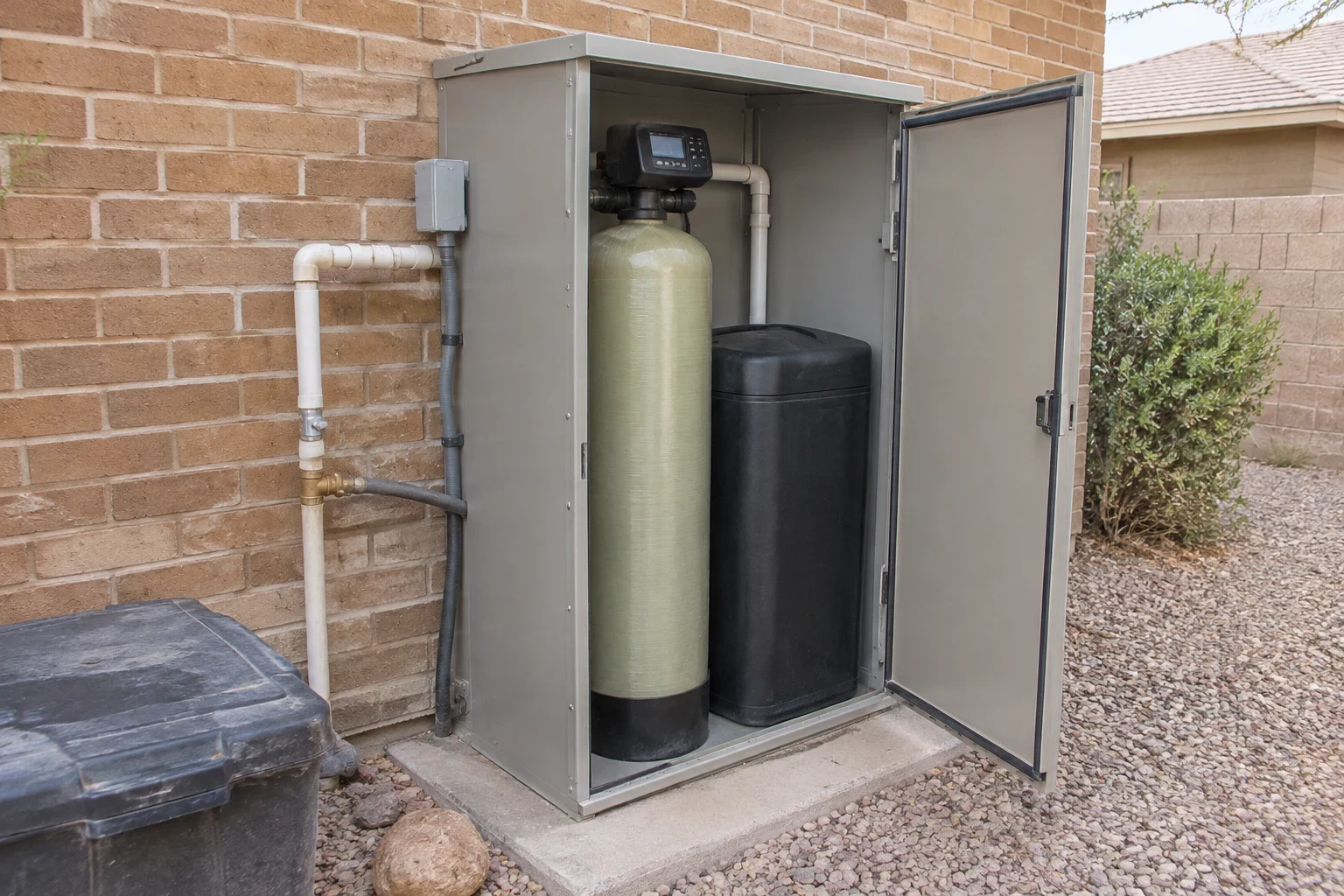
- We bring the salt to the softener, whether it sits in the garage, a utility closet or along an outside wall, and pour it into the brine tank. You do not lift a bag.
- Salt bridge check
- We press down through the salt to find any hard crust. A bridge is a shell of fused salt with an empty gap below it, so the tank looks full while the water under it never becomes brine. We break it up when we find one.
- Usage review
- We note the salt level before filling and compare it with the last visit. A sudden jump or drop tells us something changed in the softener or in your home's water use.
- Control valve and settings glance
- We confirm the display shows the correct time and that the regeneration setting looks reasonable. A clock reset by a power outage can move regeneration into the middle of the day.
- Schedule adjustment
- If your usage shifts, such as guests for a month or a household that shrinks, we change the interval so you are not paying for salt you do not need or running low.
Signs your softener needs regular salt service
You keep forgetting to check the tank
Most brine tanks hide their salt level under a lid. By the time you notice spots on the glassware again, the softener may have run empty for weeks.
The tank looks full but water feels hard
That pattern usually points to a salt bridge or a layer of mushy salt at the bottom. Both stop brine from forming even though there is plenty of salt in sight.
Salt disappears faster than it used to
A softener set for more hardness than you have, a regeneration cycle running daily, or a brine valve that overfills can all burn through salt. Each has a different fix.
Hauling 40-pound bags is getting harder
Many softeners sit in hot garages or tight closets. Carrying heavy bags in summer heat is a fair reason to hand the job off.
White crust on faucets and showerheads returns
Scale coming back on fixtures often means the resin is not being recharged. Low or bridged salt is the first thing we rule out.
What affects the cost of salt delivery
Your cost comes down mostly to how much salt your softener consumes and how often we need to come out. Because we track usage visit by visit, a softener that is set correctly usually costs less to keep supplied. Get your quote by phone once we know your setup.
Salt usage per month
Household size, softener capacity and the hardness setting decide how many bags each visit needs. An over-set softener uses more salt than the water calls for.
Type of salt
Evaporated pellets, solar crystals and potassium chloride differ in price and in how much residue they leave. Potassium chloride generally costs more per bag.
Delivery frequency
A larger brine tank can hold more salt per visit, which can mean fewer trips. Smaller tanks need shorter intervals.
Access to the softener
A softener in an open garage is quick to reach. One in a tight closet or behind stored items takes more time on each visit.
How salt delivery works
- 1
Your first call
Tell us your softener's make, where it sits in your home and roughly how often you add salt now. We use that to plan the first visit.
- 2
First visit and baseline
We look at the brine tank, clear any bridge or sludge we find, fill it and record the level. We also note the regeneration settings so we know what usage to expect.
- 3
Set the interval
From that baseline we pick a delivery interval. Two or three visits in, we compare actual salt use against the expected number and tighten the schedule.
- 4
Ongoing deliveries
Each visit repeats the fill, the bridge check and the usage comparison. If something looks wrong, we explain what we saw and what likely caused it before suggesting any repair.
Salt delivery questions
Which salt should my softener use?
High-purity evaporated pellets work well in most residential softeners because they dissolve cleanly and leave little residue. Rock salt carries more insoluble material that can settle as sludge in the brine tank. Potassium chloride is an option if you want to avoid added sodium, though it often needs a higher dosage setting. We can talk through the choice on the call.
Can you deliver salt for a softener you did not install?
In most cases, yes. Standard brine tank softeners take the same salt regardless of brand. Tell us the make and model when you call so we know what to expect on the first visit.
Do I need to be home for each delivery?
That depends on where your softener sits and how you want to handle access. Many softeners are in the garage, which makes arrangements simpler. We will work out an access plan with you during the first call.
Why does my softener use so much salt?
Common causes are a hardness setting higher than needed, regeneration on a fixed daily timer instead of by water use, or a brine valve letting too much water into the tank. Each of these shows up as a pattern across deliveries. We point it out and explain the likely cause rather than just bringing more bags.
What if my softener is too old to be worth supplying?
If resin is worn out or the control valve keeps failing, salt alone will not restore soft water. We will tell you plainly what we see. When replacement makes sense, our water softener installation page covers how that work is done.
Stop carrying salt bags
Tell us about your softener and how often you refill it now. We will set an interval that fits your actual usage and keep an eye on the tank each visit.