ServicesWater Softener Installation
Water Softener Installation in El Mirage
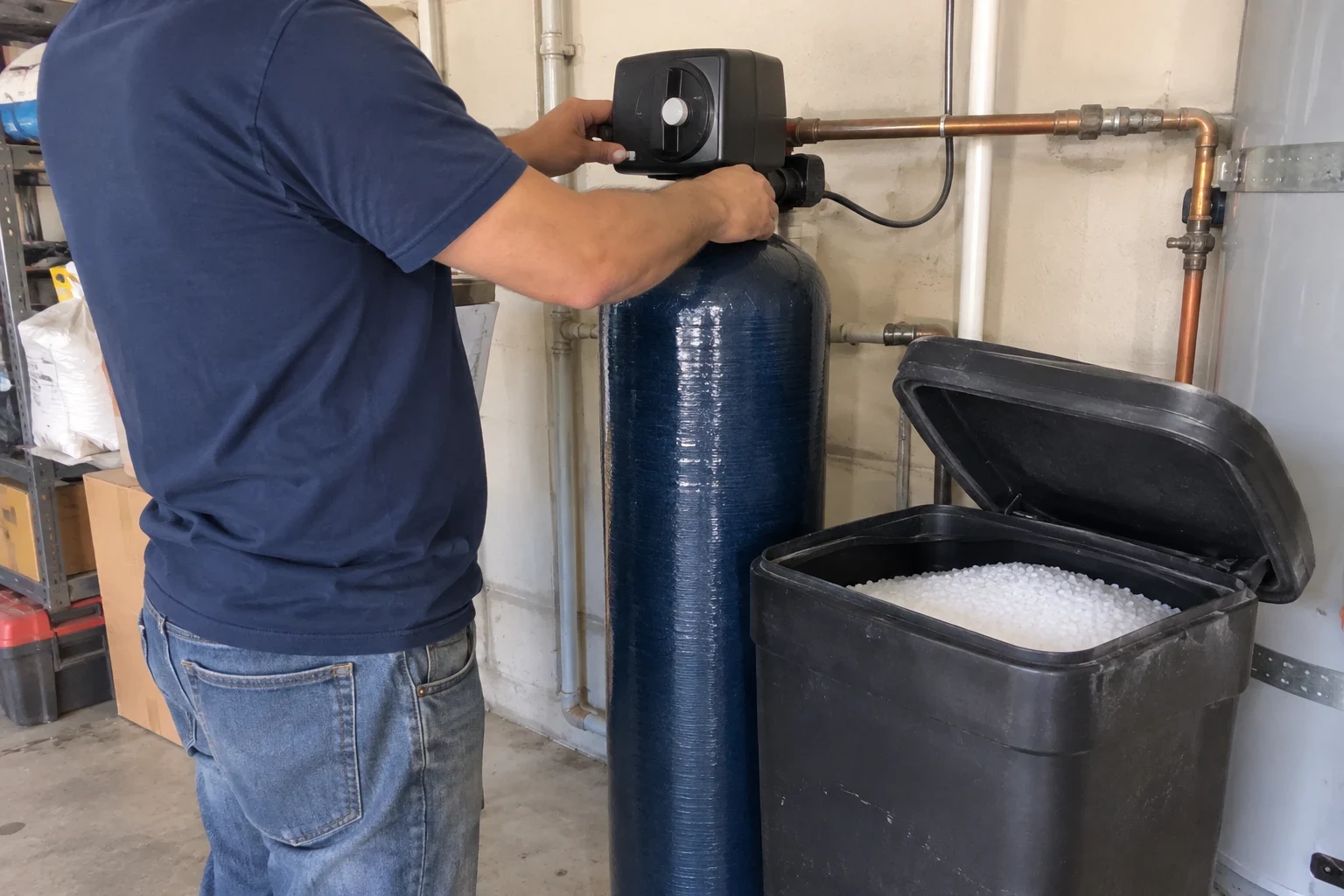
We install water softeners sized to the hardness of your water and the way your home uses it. That means the right grain capacity, a control valve set to regenerate only when needed, and a clean tie-in at your softener loop. You get soft water and less wasted salt.
What a Softener Does and When It Is the Right Fix
Hard water carries dissolved calcium and magnesium. When it heats or evaporates, those minerals drop out as scale: the white crust on faucets, the film on shower glass, the rattling sediment in a tank water heater. A softener swaps those minerals for sodium or potassium as water passes through a bed of resin beads, so the scale never forms.
A softener solves hardness and nothing else. It will not remove chlorine taste or odor, and it does not lower total dissolved solids in your drinking water. So before we quote anything, we sort out which problem you actually have. If it is scale, a softener is the fix. If it is taste, our whole-home filtration is the better answer. Many homes in the West Valley deal with both, and we will tell you plainly when that is the case.
What the Installation Includes
Sizing by grain capacity
We start from your water's published hardness, how many people live in your home and how much water you use each day. Those numbers set the resin volume. Too small a unit regenerates constantly and wears out the valve, while too large a unit leaves the resin idle long enough to channel.
Demand-initiated control valve
The valve we fit has a meter that tracks gallons used and starts a regeneration only when the resin is nearly spent. Compared with an older timer unit that cycles on a set schedule, it goes through much less salt and water.
Bypass valve and loop tie-in
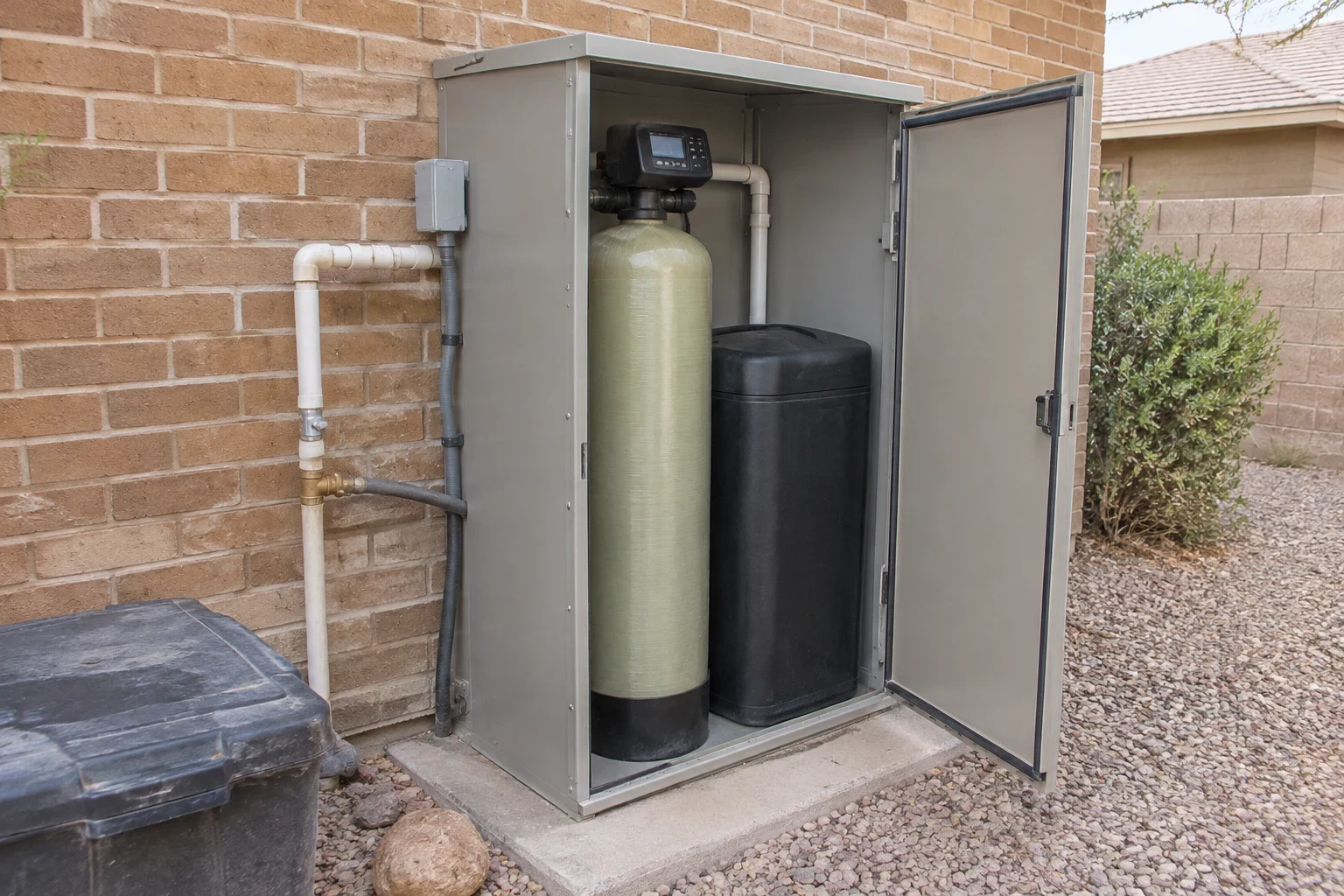
Most newer homes have a softener loop in the garage, and that is our connection point. We add a bypass valve there, so the softener can be isolated for service while every faucet in the house still has water.
Drain line with an air gap
Each regeneration sends brine and rinse water out to waste. The discharge hose ends above the drain opening with open space between them, which keeps wastewater from ever being pulled back into the softener.
Brine tank setup and first fill
We position the brine tank, pour in the first load of salt and set the salt dose to match your hardness.
Startup and walkthrough
We trigger a manual regeneration, look over every fitting for leaks, and show you where the bypass is and how much salt to keep in the tank.
Signs Your Home Needs a Softener
White crust on fixtures
Scale building on faucet aerators, showerheads and the edges of the sink is calcium carbonate left behind as water dries.
Spotted dishes and cloudy glass
Minerals left on glassware after the dishwasher runs point to hardness, not a detergent problem.
A noisy or slow water heater
When a tank heater pops or rumbles as it fires, the cause is often a layer of mineral sediment packed across the tank floor. That layer insulates the burner or element from the water and costs you energy.
Soap that will not lather
Hard water binds with soap and shampoo, so you use more and still feel a film on skin and hair.
An old unit that runs constantly
If your existing softener regenerates every night or goes through salt fast, the resin may be fouled or the valve may be on a timer. Replacing it with a properly sized, metered unit often cuts salt use noticeably.
How the Job Runs
- 1
Phone conversation
We ask about the symptoms you see, how many people live in the home, and whether you have a loop or an older unit in place. That tells us if a softener is the right fix before anyone comes out.
- 2
Site check and quote
We look at the loop, the drain options, the electrical outlet and the space for both tanks. The quote you receive is in writing and breaks out the softener model, each fitting and part, and our labor as separate lines.
- 3
Installation day
We shut off the main, remove any old unit, plumb in the bypass and new tanks, and run the drain line. Floors and the garage stay protected, and we haul away the old equipment.
- 4
Programming and checkout
We set hardness and regeneration settings, run a full cycle, check for leaks and walk you through daily care before we leave.
What Moves the Price
Softener pricing comes down mostly to the size of the unit and how much plumbing it takes to connect it. We quote after we have seen your setup, so the number reflects your home rather than a guess. These are the things that change it.
- Grain capacity
- More people in the house or harder water means more resin and a taller tank, and that raises the up-front cost.
- Existing loop or new plumbing
- Connecting to a ready-made loop is simple work. A home without one needs new pipe brought over from the main line, which adds labor and materials.
- Drain and power access
- An outlet and a drain within reach keep the job short. A long drain run or a new outlet takes extra time.
- Replacing an older softener
- Taking out the existing tanks and carting them off is a modest amount of extra labor. Now and then the old fittings will not match the new control valve and have to be swapped as well.
Water Softener Questions
Something not covered here? (623) 288-0758
How do you decide what size softener I need?
We multiply your water's hardness by your household's daily use to find how many grains of hardness the resin must remove each day. Then we pick a capacity that lets it regenerate every several days rather than every night. That balance protects the valve and keeps salt use reasonable.
Will softened water taste salty?
No. The sodium added is proportional to the hardness removed and is not enough to taste. If you want to limit sodium in drinking water, a reverse osmosis system at the kitchen sink removes most of it.
Does a softener get rid of chlorine taste?
It does not. Resin only exchanges calcium and magnesium. Removing chlorine taste and smell is a job for activated carbon, the media inside our whole-home filtration systems, and a carbon tank and a softener often share the same loop.
How long does installation take?
When there is an existing loop and a drain close by, most installs take a few hours. Homes that need new plumbing run from the main take longer, and we will tell you the expected time when we quote.
Do I have to keep buying salt myself?
You need to keep salt in the brine tank, usually checking it every few weeks. If you would rather not haul bags, our automated salt delivery service keeps the tank stocked for you.
Get the Right Softener the First Time
Describe the scale, spots or water heater noise you have noticed in your home. We will help you sort out whether a softener is the answer and which size suits your household.