ServicesReverse Osmosis System
Reverse Osmosis System Installation in El Mirage
A reverse osmosis system pushes your kitchen water through a semipermeable membrane that holds back most dissolved minerals, salts and off tastes. We look at your pressure, your sink cabinet and what is upstream before we choose a system, so it makes good water from the first day.
What reverse osmosis does and when it fits
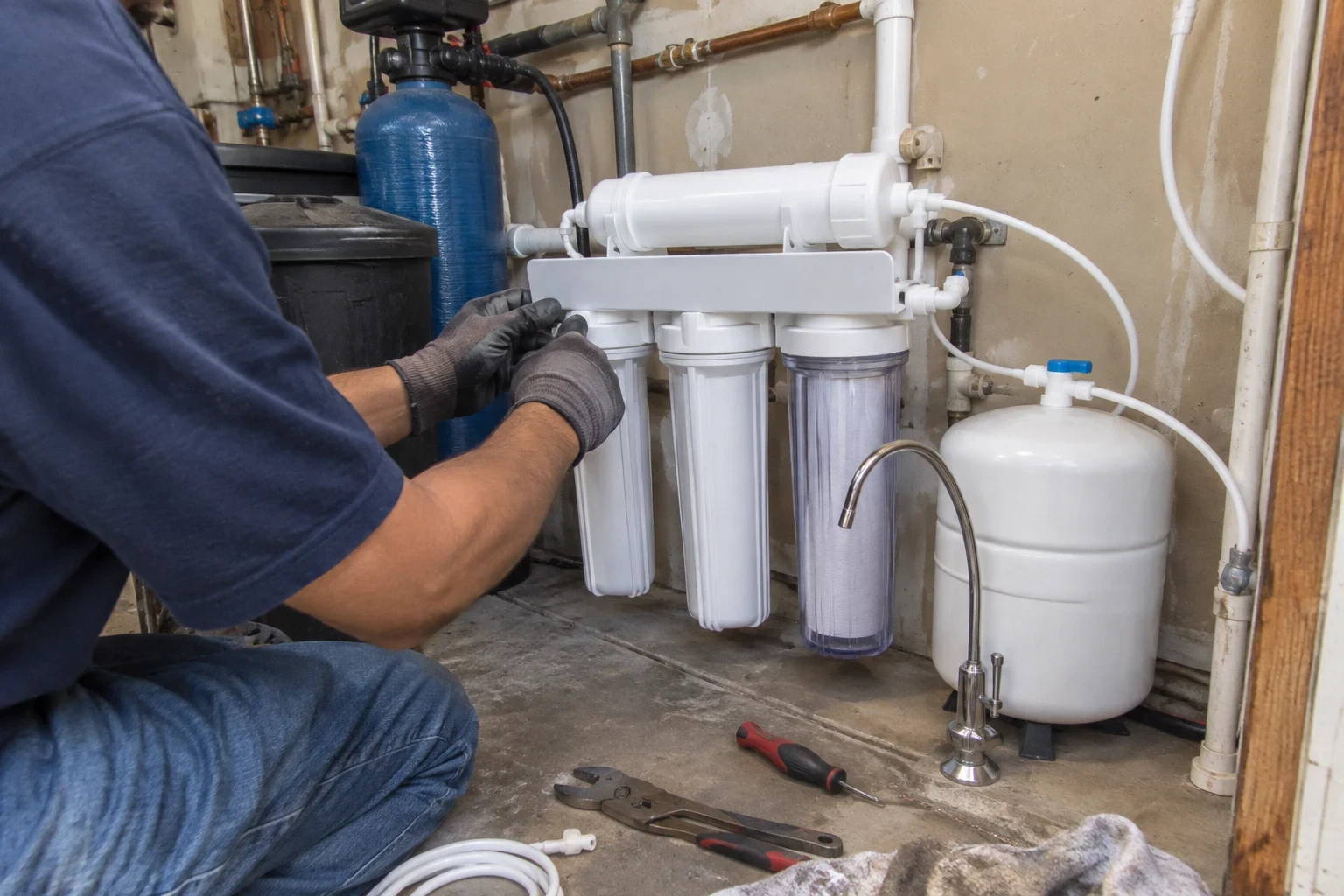
An RO system serves one tap, the one you fill glasses and pots from, while showers, laundry and the water heater stay on regular supply. A typical under-sink unit runs water through a sediment prefilter, a carbon block, the RO membrane and a carbon polishing filter. Treated water is held in a small pressurized tank that feeds its own faucet at the sink.
It is the right call when the complaint is taste, mineral content or crust forming in the kettle and coffee maker. It will not fix shower spots or scale in the water heater, because those lines never run through the RO. For those, we point you toward water softener installation or whole-home filtration.
Tap water in El Mirage and the towns around it is high in dissolved minerals, and stripping out dissolved solids is exactly what a membrane is built for. A good result depends on sizing the system to the pressure and plumbing in your home.
What the installation includes
- A look at pressure and plumbing
- We check incoming water pressure and the cold-water shutoff under the sink. The membrane needs steady pressure to do its job, and a corroded angle stop should be swapped out before we connect to it.
- Prefilters chosen for your water
- The sediment and carbon stages shield the membrane. Carbon pulls out chlorine, which would slowly degrade the thin-film membrane if it got through.
- Dedicated drinking water faucet
- The faucet goes into an open sink hole or a new one we drill. Granite and quartz counters are cut with a proper core bit so the stone does not chip.
- Drain connection done to code
- Reject water flows to a drain saddle on the sink tailpiece, with an air gap where code calls for one, so wastewater cannot siphon back into the system.
- Optional refrigerator line
- We can tee the RO output over to the refrigerator, so ice and the door dispenser draw from the same treated supply as the sink faucet.
- Startup, flush and walkthrough
- We flush the new cartridges, check each fitting for drips, and show you the shutoff and which filters get replaced.
Signs a reverse osmosis system makes sense
You buy cases of bottled water
If nobody in your home drinks from the tap, an RO faucet usually replaces the bottles and the trips to haul them.
White crust in the kettle
Mineral scale inside a kettle, coffee maker or humidifier means a lot of dissolved solids in the water you heat. A membrane removes most of them before they reach the pot.
Chlorine or flat taste
Disinfectant taste and odor come through the carbon stages and are gone at the RO faucet.
Cloudy ice and spotted glasses
Minerals left behind as water freezes or dries cause haze. Ice and rinse water from an RO line come out clearer.
An old RO that runs slow
A tank that fills slowly or a faucet that trickles often points to a fouled membrane, a tank that lost its air charge or low pressure. We find which one before replacing anything.
What affects the price
Most of the price comes down to the system you choose and how much fitting your sink cabinet, countertop and supply lines need. We walk through each part with you before work starts. Add-ons like a refrigerator line or a remineralization stage stay your decision, made with the figures in front of you.
System type and stages
Tank-style and tankless units are priced differently, and each added stage changes the total. A remineralization cartridge, which returns calcium and magnesium for taste, is one of those additions.
Countertop material
An open hole already in the sink deck means no drilling. Granite or quartz takes longer to cut and calls for the correct core bit.
Extra lines
Sending treated water to an ice maker or refrigerator dispenser adds tubing, fittings and install time. A fridge on the far side of the kitchen needs a longer run than one beside the sink, and the price reflects that distance.
Existing plumbing condition
A seized shutoff valve or a worn tailpiece gets replaced so the new system connects to sound parts.
Pressure correction
If incoming pressure runs low, a booster pump may be needed to keep the membrane producing water efficiently.
How the job runs
- 1
A conversation by phone
Tell us what you notice in your water, whether it is taste, scale or cloudy ice, and list any filters or softener you already have. That tells us whether reverse osmosis fixes it or another service fits better.
- 2
Check the site
We measure the sink cabinet, note where the garbage disposal and tailpiece sit, and check pressure. Low pressure slows production and raises reject water, so it may call for a booster pump.
- 3
Mount, plumb and drain
The filter housings mount on the cabinet wall with the storage tank beside them. We tap the cold supply, fit the drain saddle and set the faucet, then set the tank's air charge while it is still empty.
- 4
Flush and inspect
The first full tank is drained to clear carbon fines and the membrane's preservative. We check every connection for leaks and leave the cabinet clean.
Reverse osmosis questions
How much water does an RO system send down the drain?
Every RO system sends some water to the drain, because that flow rinses rejected minerals off the membrane surface. How much depends on the membrane design and the pressure in your home. Good pressure and a properly sized unit keep the waste ratio down, which is why we check pressure before choosing a system.
How often do the filters need changing?
Plan on replacing the sediment and carbon prefilters roughly every twelve months, or earlier in a home that goes through a lot of drinking water. The membrane itself is good for several years in most kitchens, with the exact span set by how much mineral it has to reject. Skipped prefilter changes are the usual reason a membrane fails ahead of schedule.
Will RO water taste flat?
Water with its minerals removed tastes different to some people. An optional post-filter stage adds back a small amount of calcium and magnesium to round out the flavor. It can go in during the install or be added later.
Do I need a water softener too?
Not for drinking water, since the RO handles that by itself. A softener protects the rest of your home's plumbing and fixtures from scale. With one installed upstream, the membrane also scales more slowly and tends to last longer.
Will it fit under my sink with a garbage disposal?
In most kitchens, yes. The filter housings mount to a side wall of the cabinet and the tank stands beside them. Where space is tight, a slim tank or a tankless unit solves it.
Better drinking water starts with the right setup
Tell us about your kitchen, your water and anything already installed. We serve El Mirage, Surprise, Sun City and nearby towns, and we will explain what system fits before anything goes under the sink.